Tags: #ev-technology #electric-vehicles #ev-ownership
The updated Lexus RZ gets a bigger battery, faster charging, steer-by-wire and a simulated eight-speed manual gearbox. It's a huge step forward over the original, but at over £71,000, is the flagship 550e F SPORT good enough to take on the best premium electric SUVs?
Discover EV expert verdict...


If you read our review of the original Lexus RZ, you'll remember it was a bit of an odd one. It was beautifully built, incredibly refined and reassuring with all-wheel drive, but it never quite fulfilled its potential. The range wasn't class-leading, charging lagged behind rivals, and it never gave you a compelling reason to pick it over an Audi Q4 e-tron, Tesla Model Y or Genesis GV60.
Lexus has clearly been listening, because this is far more than a facelift. Underneath, almost everything that matters has changed. There's a revised electric powertrain with a larger 77kWh battery, redesigned motors (or eAxles, in Lexus speak) that lose less energy while producing more power, a 22kW onboard AC charger and battery pre-conditioning for faster, more consistent rapid charging. The body has been stiffened, the suspension retuned, the DIRECT4 all-wheel-drive system refined and even more sound insulation added.
Then there are the two headline features: steer-by-wire with a yoke, and Interactive Manual Drive, a simulated eight-speed manual gearbox. Before you roll your eyes, bear with us. After time with the flagship RZ 550e F SPORT Takumi, we think Lexus might be onto something.
Despite selling fewer cars than BMW, Audi or Mercedes, Lexus has one of the strongest reputations in the premium market. It consistently tops reliability surveys and its owners are famously loyal. The question is whether the new RZ finally ticks all the boxes, or whether it's still the left-field choice in a class packed with brilliant alternatives.
Within the first mile, it's obvious this still feels unmistakably like a Lexus. If you've driven an NX, RX or the previous RZ, you'll recognise that signature character straight away: calm, whisper quiet and effortlessly comfortable.
The flagship 550e F SPORT produces around 402bhp from its twin-motor, all-wheel-drive set-up, enough for 0-62mph in just 4.4 seconds. What impresses most, though, isn't the acceleration but how seamlessly it's delivered. Much of that is down to the revised DIRECT4 system, which constantly varies torque between the front and rear motors based on speed, steering angle, acceleration and cornering forces. Under hard acceleration it shifts torque rearwards for traction, while through corners it subtly adjusts the balance to help the car turn in before keeping it stable on the exit. You don't notice it working; you simply notice how planted the RZ feels.
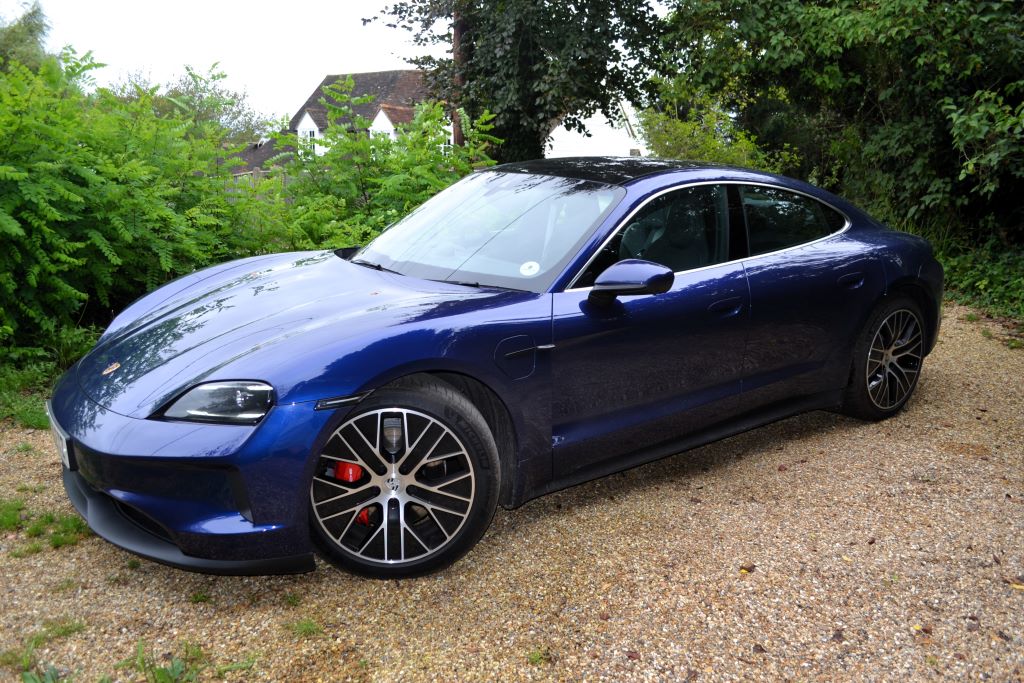
The original RZ was criticised for feeling a little detached when the road got interesting, and this one is noticeably sharper. Body roll is well controlled, grip is excellent and it flows naturally from one corner to the next. It isn't trying to be a Porsche Macan Electric, though. If the Porsche is about excitement, the Lexus is about confidence. We wouldn't call it thrilling, but it is deeply satisfying.
Crucially, none of that comes at the expense of comfort. Potholes and speed bumps are absorbed with impressive refinement, and the dampers do an excellent job of isolating broken rural roads from the cabin, even on the larger F SPORT wheels. It can't quite match the floating feel of adaptive air suspension, but for a conventional steel-sprung set-up, it's one of the best balances of comfort and control in the class.
Then there's the steering yoke. There's no mechanical connection between your hands and the front wheels, and it needs just 200 degrees from lock to lock. You get a clear view of the instruments, parking is effortless and the ratio changes with speed, so it's stable on the motorway and direct on country roads. It also filters out kickback from rough surfaces. The downside is that decades of muscle memory take time to retrain. For the first few days we found ourselves overcorrecting during slow manoeuvres, and we still weren't entirely confident pushing on tighter B-roads. At times it feels like you're steering through software rather than a physical connection to the road. Some drivers will adapt quickly; we're not yet convinced it's better than a conventional rack.
Regenerative braking is well judged, with several levels available via the paddles. The strongest gets close to one-pedal driving, although it won't quite bring the car to a complete stop, and the transition between regenerative and friction braking is smooth and predictable, something surprisingly few EVs manage.
Finally, Interactive Manual Drive. Use the paddles and the RZ simulates gearshifts, engine sound and torque delivery across eight virtual gears, and if you don't change up, it behaves as though you've bounced off the rev limiter. It sounds ridiculous, because it is. But it's also surprisingly entertaining and adds a layer of involvement that's often missing from powerful EVs. It isn't as convincing as the Hyundai IONIQ 5 N's system, but Lexus deserves credit for trying something different. And if it's not your thing, simply switch it off.
The updated RZ gets a larger 77kWh battery and, depending on model and wheel size, an official WLTP range of between around 280 and just over 300 miles. The flagship 550e F SPORT on 20-inch wheels sits at the lower end of that, at around 280 miles.
As we always say at Discover EV, WLTP figures are useful for comparing cars but less useful for planning your holiday. Based on the improvements Lexus has made, we'd expect owners of the 550e F SPORT to see somewhere around 230 to 260 miles in mixed UK driving, less on cold winter motorway runs. That's a clear improvement on the old car, but there's still a gap to some of its closest rivals.
Charging has taken a meaningful step forward too. A 10-80% rapid charge takes around 28 minutes, and battery pre-conditioning plus revised thermal management should mean the RZ hits its peak charging speeds more consistently, particularly in cold weather. It still won't trouble the fastest 800-volt cars from Hyundai, Kia or Porsche, though.
At home, a full charge on a 7kW wallbox takes roughly 11 hours, or around seven and a half hours on an 11kW supply. The new 22kW onboard charger can roughly halve that again where a compatible three-phase charger is available, although few UK homes have one. Charge overnight on an EV tariff and a full battery costs well under £10; on a standard domestic tariff, expect closer to £20. Relying on public rapid chargers is much more expensive, so home charging makes a big difference to running costs.
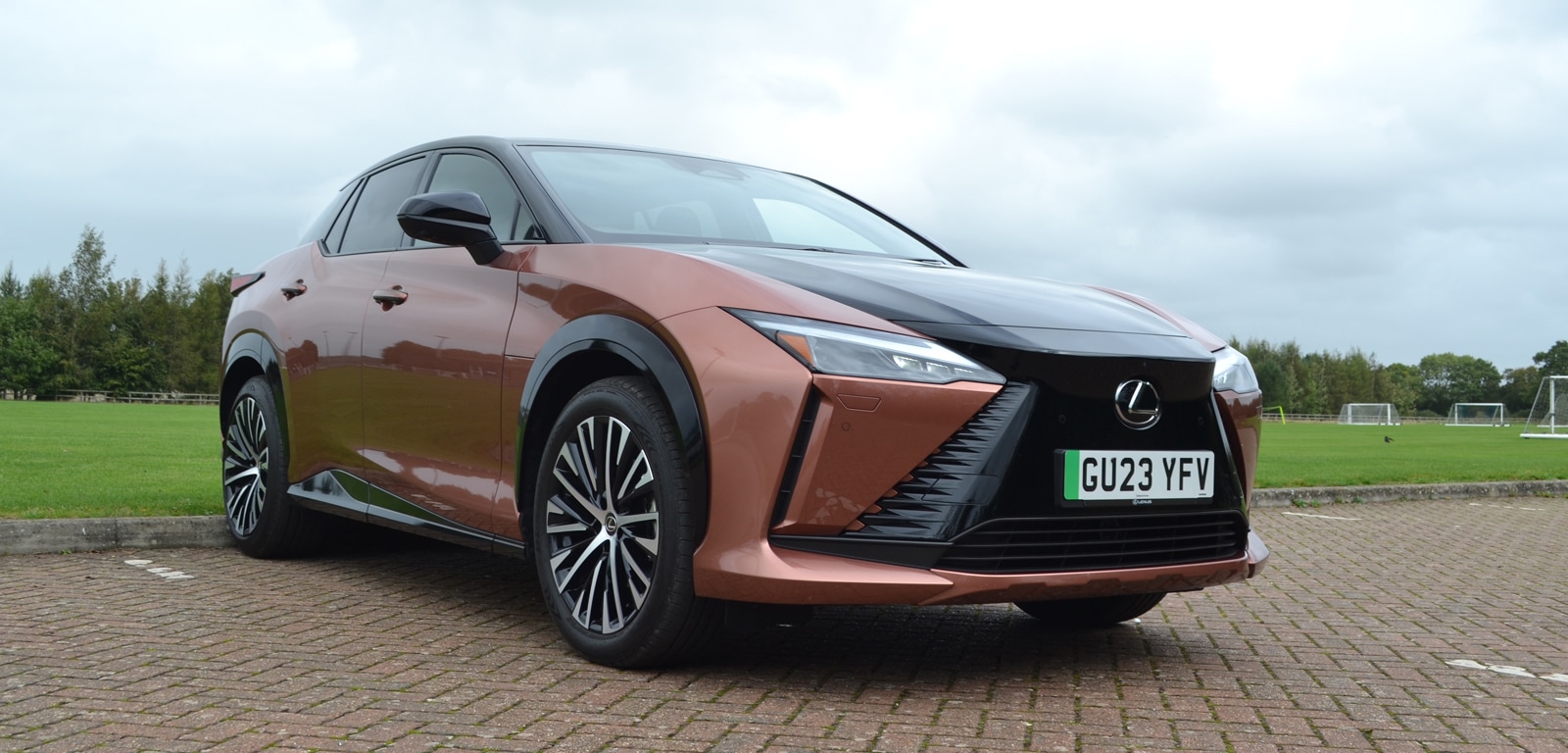
At first glance you'd struggle to tell the new RZ from the old one, and that's no bad thing. The traditional spindle grille has evolved into what Lexus calls the 'spindle body', flowing cleanly into the bonnet for a face that's futuristic without being overstyled, and the slim daytime running lights remain one of the best lighting signatures in the business. The proportions lean more towards crossover than full SUV, with a sweeping roofline that looks sleek without compromising practicality. The flagship F SPORT Takumi adds a more aggressive front bumper, aerodynamic tweaks around the wheels, a larger rear spoiler and striking 20-inch alloys, giving it a stronger stance that's sporty without trying too hard. The two-tone roof has become a Lexus trademark and suits the RZ perfectly, while tight panel gaps, excellent paint and doors that close with a reassuring thunk show build quality is exactly what you'd expect.
Inside is where Lexus believes it can still teach the rest of the premium market a thing or two. There are no elaborate welcome animations or nightclub-style ambient lighting; instead, the cabin feels calm, minimal and genuinely relaxing, reflecting the Japanese concept of Omotenashi, anticipating a guest's needs before they ask. The materials feel superb, the stitching is beautifully executed and every switch has a reassuring weight, which is exactly what you'd expect at over £70,000. F SPORT Takumi models add heavily bolstered Ultrasuede sports seats with integrated headrests, aluminium pedals, unique trim, extra ambient lighting and F SPORT branding throughout. It feels special without shouting about it, and the dimmable panoramic roof is a hit with passengers, especially children.
Dominating the dashboard is Lexus' latest 14-inch touchscreen infotainment system, and it's a huge improvement over previous Lexus set-ups. The graphics are cleaner, it responds much more quickly, the menus are more logical and wireless Apple CarPlay and Android Auto both work well. Compared with BMW, Audi or even Hyundai, though, it still isn't class-leading; some functions need too many presses and the interface isn't quite as slick. Thankfully, Lexus has kept physical controls for key climate functions.
The yoke brings one practical niggle. Because it's so compact, some of the controls around it feel cramped, and we managed to activate the windscreen washers while trying to change gear.
Elsewhere, there's wireless phone charging, USB-C ports, generous storage under the centre console, decent cupholders and practical door bins. Nothing revolutionary, just well thought-out. The 522-litre boot is respectable, although there's still no front boot for storing charging cables.
In the back, the flat EV floor means plenty of legroom, and headroom is surprisingly generous given the sloping roofline, so six-foot adults will be perfectly comfortable. Rear passengers also get their own climate controls and USB charging ports. Up front, the F SPORT seats are supportive without being uncomfortable on longer journeys, and like the rest of the car, the cabin is quiet, beautifully finished and exceptionally comfortable.
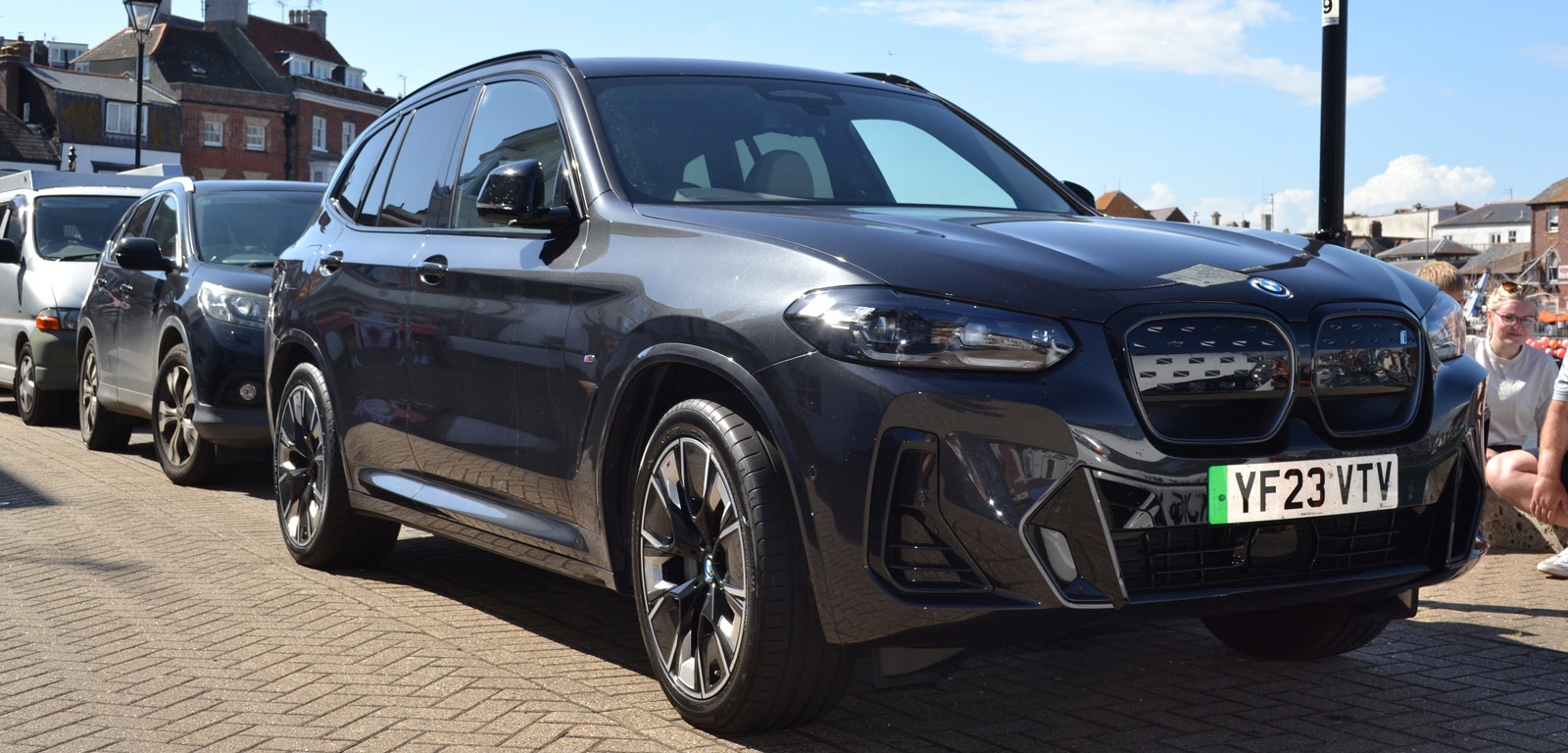
The RZ range starts from £48,365, but by the time you reach this flagship 550e F SPORT Takumi, you're looking at just over £71,000. That's probably its biggest challenge, not because it isn't good, but because that's serious money in today's EV market. For that price you could have an Audi Q6 e-tron, Porsche Macan Electric, Polestar 4 Dual Motor, Tesla Model Y Performance, Genesis GV60 Performance or BMW iX3, many with change left over, and each offers longer range, faster charging, sharper handling or more advanced tech.
So should you buy one? If you want the fastest electric SUV, the longest range or the latest software, there are stronger options. But if you value craftsmanship, outstanding build quality, a genuinely luxurious cabin, refinement, comfort and the reassurance of Lexus reliability, the RZ deserves to be high on your shortlist. It isn't perfect, but it's one of the most convincing mid-life updates we've seen to an electric car. Lexus has addressed almost every criticism of the original; unfortunately, the game has moved on again. Even so, the RZ is more capable, more engaging and far more competitive than before.
Price (RRP OTR): From £48,365, £71,000+
Top speed: 112mph
0-62mph: 4.4 seconds
Power: 300kW (402bhp)
Torque: 396 to 398 lb-ft
Driving range (combined): Approx. 280 miles
Charging time: Approx. 7.5hrs (11kW, 0-100%), 28min (rapid, 10-80%)
Insurance group: 45E
Vehicle warranty: 3 years / 60,000 miles (up to 10 years / 100,000 miles with Lexus Relax servicing)
Battery warranty: 8 years / 100,000 miles (extendable up to 10 years / 621,000 miles with annual battery health checks)
Related Articles...