
Reviews 5 min read
Audi RS e-tron GT review: blistering speed but is it the ultimate daily EV?
A striking electric grand tourer with serious pace and real-world usability – but is it the ultimate daily super EV?
Discover EV expert verdict...

4.5 / 5
- Explosive performance
- Head-turning design
- Impressive charging speeds
- Infotainment is underwhelming
- Not the most engaging drive
- Practicality is limited
Overview
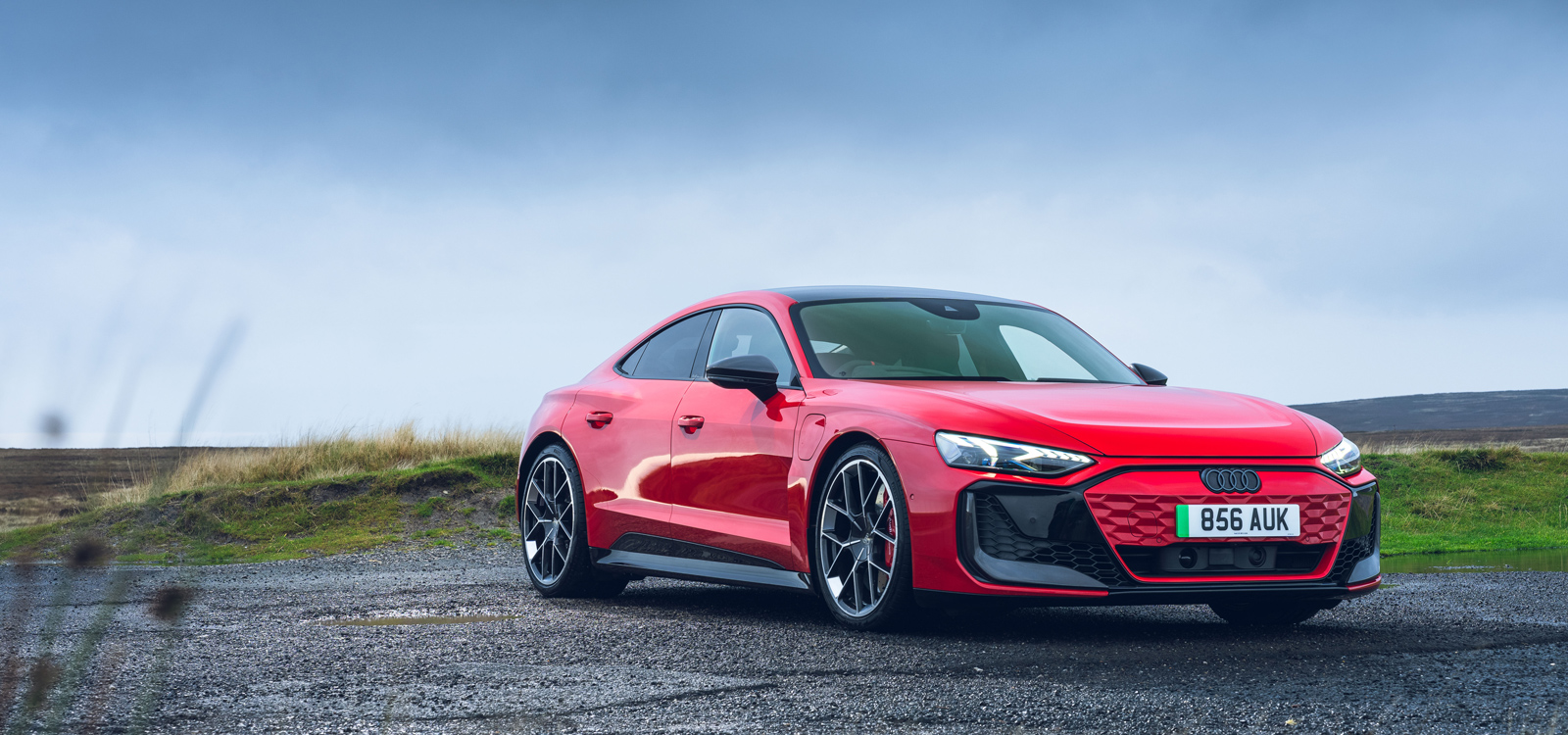
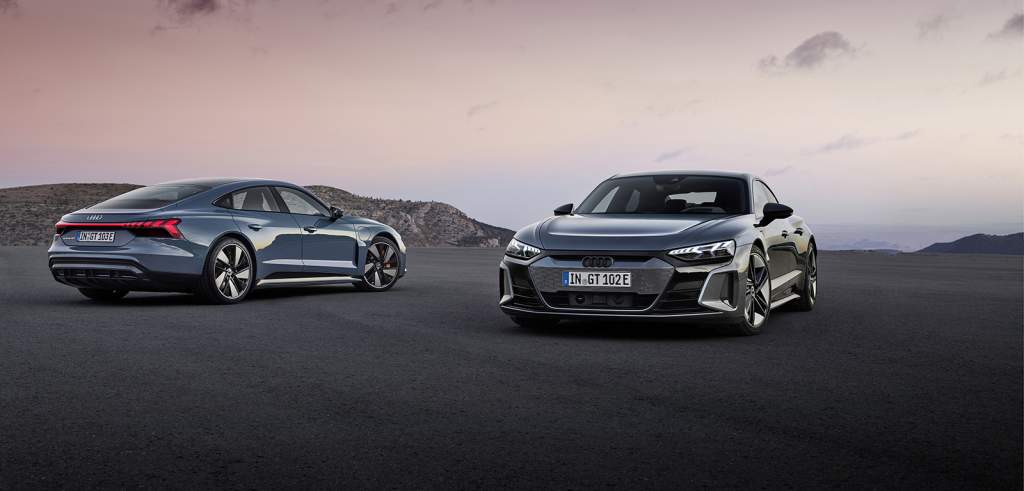
The Audi RS e-tron GT sits at the sharp end of Audi’s electric line-up, blending supercar pace with grand touring comfort. Based on the same J1 platform as the Porsche Taycan, it has always lived slightly in the shadow of its Stuttgart sibling – but Audi has given it a refresh and sharpened its identity.
Having driven the tamer GT version previously (a car we rated 4/5 for its refinement and design) the RS promises to dial things up significantly. Prices start at £127,375, climbing to well over £140,000 for top-spec versions.

Driving
Let’s start with the headline figures: in launch control, the RS e-tron GT delivers a staggering 845bhp, rocketing from 0–62mph in just 2.8 seconds. Even without it, 764bhp and 225lb-ft of torque is sent through the front wheels and 435lb-ft out the back, enabling you to complete the same sprint in 3.1 seconds.
On the road, it feels blisteringly quick, the kind of acceleration that never really gets old. There’s also a clever push-to-pass function that unlocks an extra 94bhp for short bursts, adding to the drama when overtaking.
Audi has worked on the chassis too. Revised rear-wheel steering and a re-engineered adaptive air suspension setup make it feel more agile than its size suggests. On a tight, twisty road, it’s surprisingly responsive, with improved front-end feedback compared to before.
That said, you’re always aware of its weight and long 2.9-metre wheelbase during quick direction changes. Grip however is great, thanks in part to the model-specific Bridgestone Potenza Sport tyres.

Range and running costs
The RS e-tron GT is equipped with a 97kWh battery, offering an official range of up to 365 miles, a notable improvement over the previous version.
In real-world driving, around 300–330 miles is realistic depending on conditions, and with careful driving, you might get close to the claimed figure. Efficiency hovers at around 3.3 miles per kWh, which is respectable for something this powerful.
Charging is another strong point. Thanks to upgraded hardware, it now supports up to 320kW DC rapid charging. That means a 10–80% top-up can take as little as 18 minutes under ideal conditions. AC charging at 11kW takes several hours for a full charge overnight.

Design
The RS e-tron GT is probably one of the most visually dramatic EVs on sale. Compared to the sleeker, more minimalist Taycan, the Audi goes for bold presence.
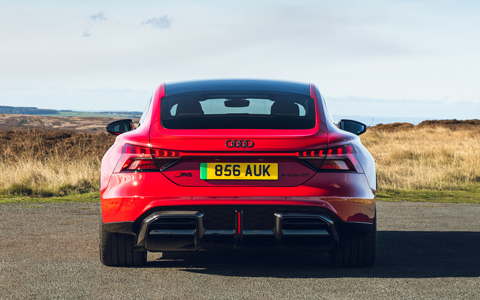
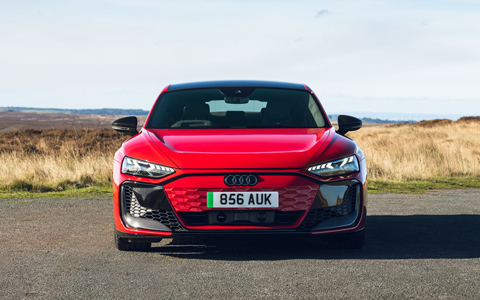
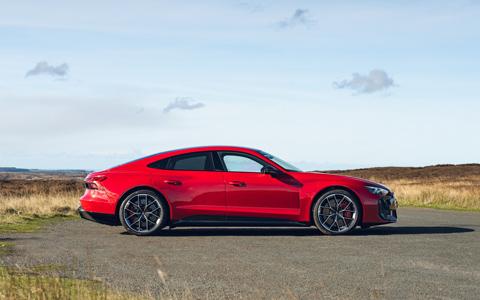
Subtle updates include a new 3D honeycomb grille and a more aggressive rear diffuser, giving it a sharper, more motorsport-inspired look. The RS-specific body kit, 21-inch wheels and optional carbon elements enhance its road presence. It’s the kind of car that genuinely turns heads.
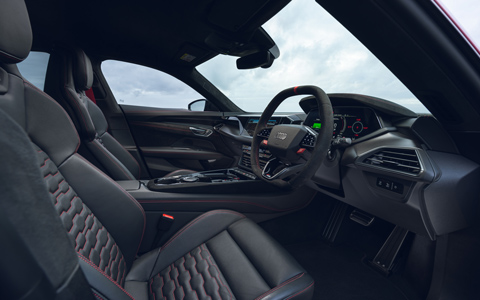
Inside, it’s a mix of high-quality materials and a few surprising shortcomings. The sporty seats are excellent, supportive yet comfortable, even offering a massage function. There’s plenty of suede and premium trim, especially in Carbon Black models.
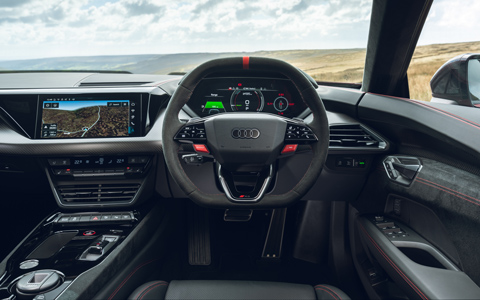
However, the tech doesn’t quite match the price tag. The 10.1-inch infotainment screen and 12.2-inch digital cockpit are lifted from cheaper Audi models. They’re functional and responsive, but lack the wow factor you would expect at this cost.
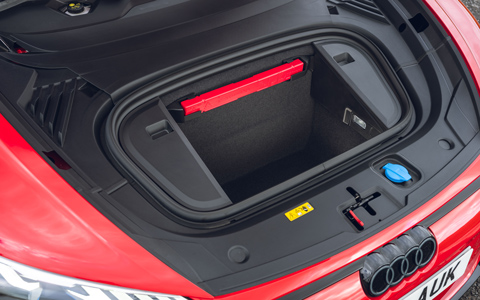
There are also some ergonomic quirks. Personally I am not a fan of Audi's preference for chopping off the top and bottom of the steering wheel. Also, the touch-sensitive controls are frustratingly easy to mis-press. Even simple things, like USB-C ports hidden under the armrest or the awkwardly placed frunk release, all feel unnecessarily fiddly.
Comfort and practicality
Comfort is where the RS e-tron GT shines. The adaptive air suspension smooths out rough roads beautifully, and there’s even a “comfort entry” mode that raises the car by 22mm – a genuinely useful feature day to day.
Rear seat space is cleverly engineered with a “foot garage” cut-out in the battery pack, allowing passengers to sit lower and gain extra headroom. It’s a smart solution, though it still isn’t the most spacious rear cabin in the class.
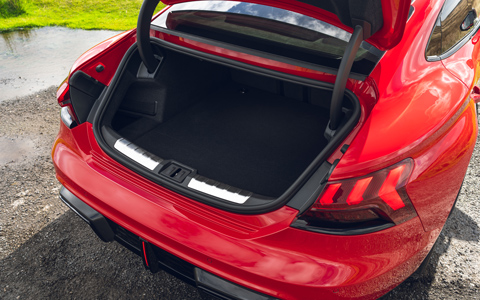
Boot space stands at 405 litres, with an additional 81-litre frunk. That’s decent, but not class-leading, and the coupe-like shape limits outright practicality.
Overall, it’s comfortable and usable, but not especially versatile.
Verdict
The Audi RS e-tron GT is an undoubtedly impressive machine. It’s outrageously fast, beautifully designed and exceptionally comfortable over long distances. It’s not perfect however. The infotainment system feels underwhelming, and while it’s capable on a twisty road, it lacks the driver engagement of key rivals.
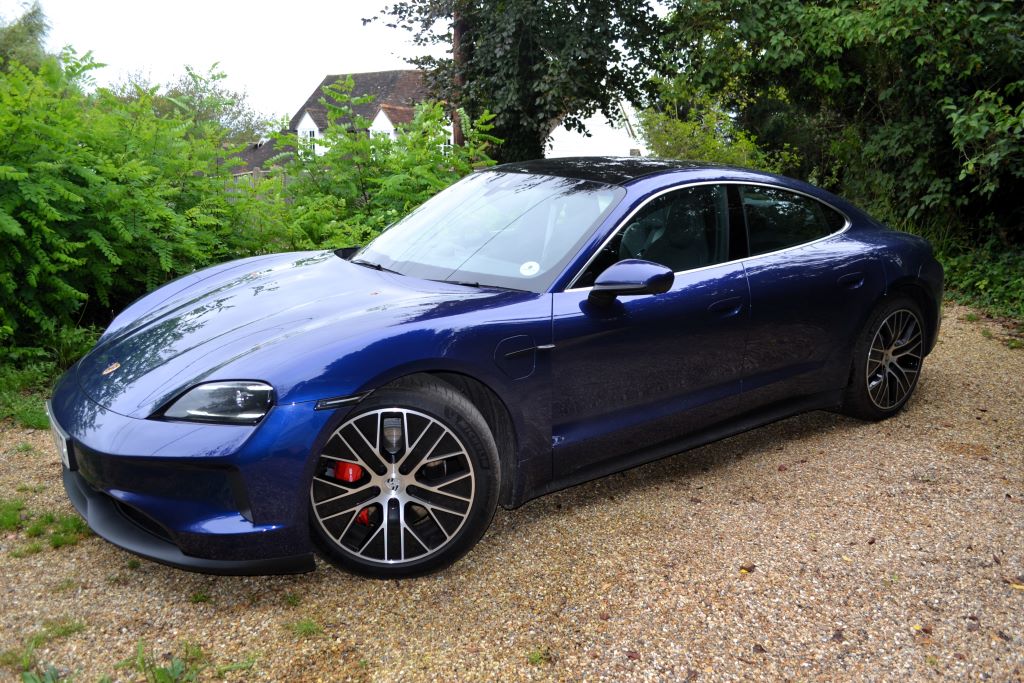
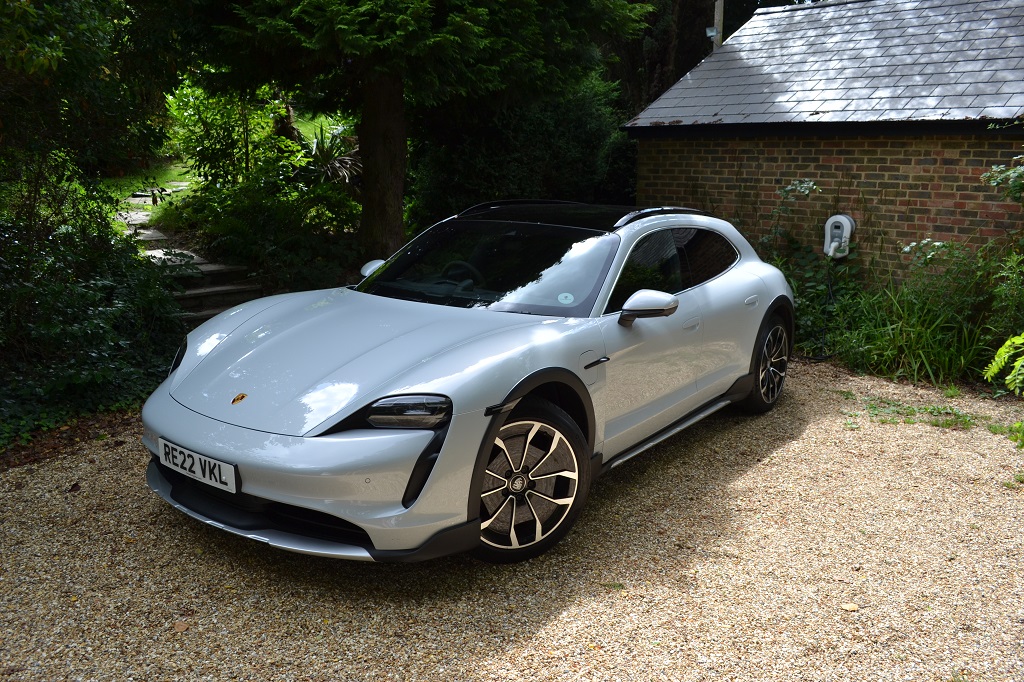
Having tested both, I can’t help but compare it to the Porsche Taycan. The Audi is softer, more luxurious, and arguably more striking, but I personally prefer the Taycan’s stealthier looks, more driver-focused cockpit, and tighter steering and chassis tuning. That said, I’m not a fan of having to pay extra for features like adaptive cruise control and heated seats (though that may be a small price to pay for Porsche heritage).
If you want a dramatic, luxurious electric GT that turns heads and covers miles with ease in comfort, the RS e-tron GT is a fantastic choice. If driving dynamics are your priority however, you may still lean towards the Taycan.
At this price point, each brand offers something a little different – and ultimately, this is a decision led more by the heart than the head.
Check out our video review here.

Key Specs
Audi RS e-tron GT 2026
Price (RRP OTR): From £127,375
Top speed: 155 mph
0–62mph: 2.8 seconds
Power: 764bhp
Torque: 664 lb-ft
Driving range (combined): 365 miles
Charging time: 9 hrs (11kW, 0–100%), 18 min (320kW, 10–80%)
Insurance group: 50
Vehicle warranty: 3 years / 60,000 miles
Battery warranty: 8 years / 100,000 miles




Comments (0)
Be the first to write a comment
Login/ Signup