
Reviews 7 min read
Hyundai IONIQ 9 review: the elephant in the room is a brilliant family EV
Hyundai’s biggest electric car yet is a seven-seat SUV with a 110kWh battery, a cabin the size of a small flat and a price tag that undercuts its key rivals. But is the IONIQ 9 the family-friendly electric flagship we’ve been waiting for?
Discover EV expert verdict...


4 / 5
- Enormous, flexible cabin with a genuinely usable third row
- Huge 110kWh battery and up to 385 miles of official range
- Generous standard equipment and rapid 800V charging
- Real-world range falls well short of the official figure
- Its sheer size and 12.5-metre turning circle make town driving a chore
- Optional digital door mirrors are pricey and hard to judge distances with
Overview
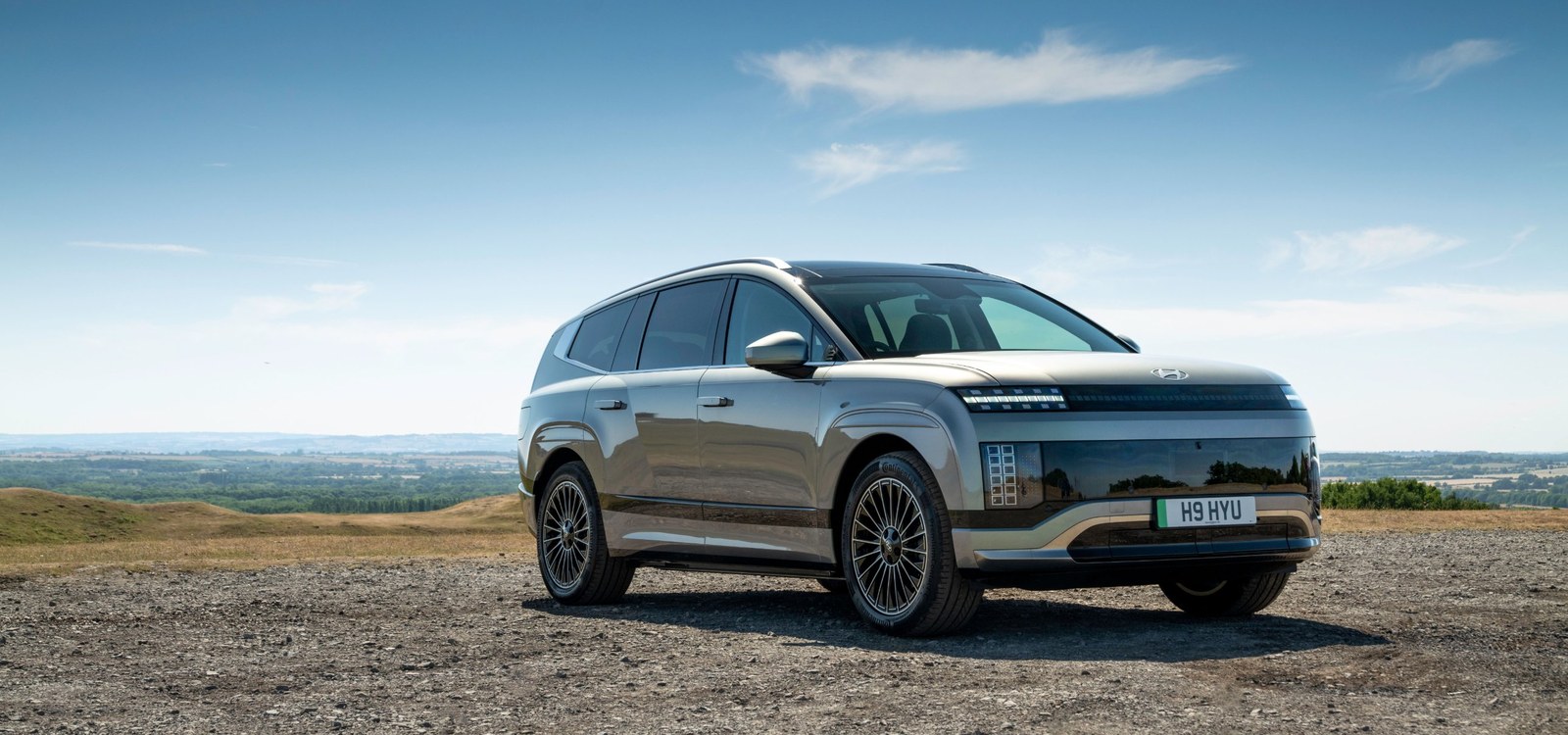
Between 2003 and 2008, Hyundai’s best-selling car in Europe was the Hyundai Getz – a hatchback so beige it could blend into your parents’ living room wall. Fast-forward to today and the Korean brand is building the IONIQ 9, a three-row, all-electric SUV roughly the size of an African forest elephant.
That’s not as daft a comparison as it sounds. At around 1.8 metres tall, the IONIQ 9 stands shoulder to shoulder with the world’s smallest elephant species, and at just over five metres long and almost two metres wide, it’s rather bigger in every other direction.
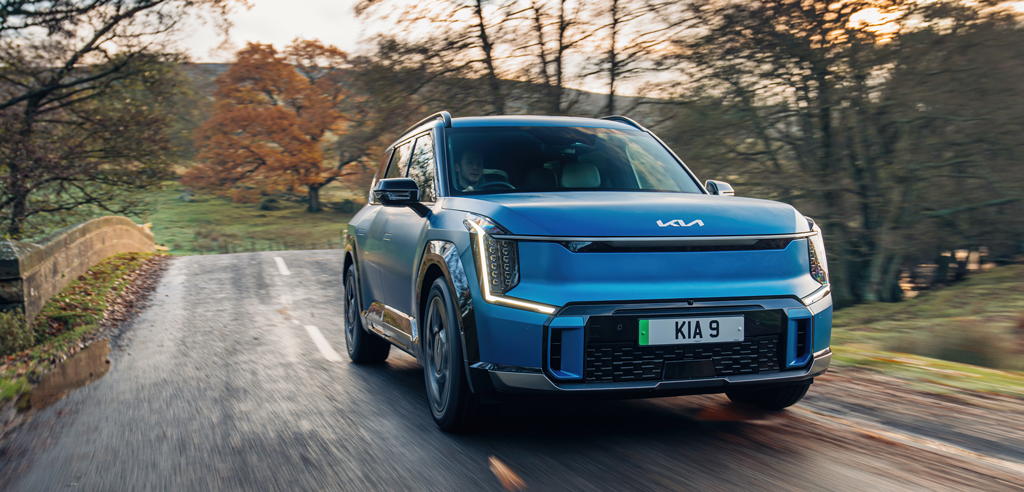
It’s essentially the production version of Hyundai’s Seven concept car, and it’s aimed squarely at the Kia EV9, Volvo EX90 and anyone after a big luxury SUV who doesn’t suffer from Range Rover badge snobbery. Prices start from £64,995, every version gets a 110kWh battery, and the official range stretches to 385 miles.
It seats up to seven adults, can tow up to 2,500kg and – thanks to its vehicle-to-load function – can even power your camping gear. So, is this the electric family flagship we’ve been waiting for?

Driving
There are three versions to choose from, all with the same battery. The entry-level Long Range RWD has a single 215bhp motor driving the rear wheels, which gets it from 0-62mph in 9.4 seconds. The Long Range AWD adds a front motor for 303bhp and a 6.7-second sprint, while the Performance AWD we tested packs 422bhp and 516lb-ft of torque, cutting the 0-62mph time to a remarkable 5.2 seconds.
That’s seriously quick for something weighing around 2.6 tonnes, yet the power delivery is calm and linear rather than neck-snapping. Regenerative braking is smooth too, and paddles behind the steering wheel let you flick between freewheeling, one-pedal driving and an adaptive mode that adjusts to the traffic ahead.
On the move, the IONIQ 9 feels smaller than it is. The steering is light and accurate, and the suspension is soft enough to soak up bumps while keeping the body in check. It’s not a sporty SUV, and quick changes of direction remind you of its bulk, but torque vectoring, crosswind stability control and multiple traction modes keep it feeling safe and composed.
On the motorway it’s a serene, limo-like experience. Active noise cancellation, acoustic glass and sound-absorbing tyres keep the cabin hushed, although the ride isn’t quite as plush as the air-suspended BMW X7 and can feel a little fidgety over uneven surfaces at speed.
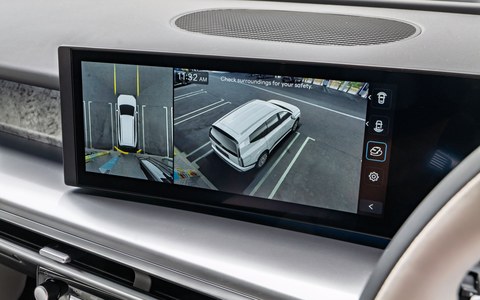
Town driving is more of a mixed bag. Big windows and a host of cameras and sensors make it easier to place than you’d think, but you’re always conscious of its size when parking, and a 12.5-metre turning circle doesn’t help in tight multi-storeys.

Range and running costs
Every IONIQ 9 gets a 110.3kWh battery (around 105kWh usable), one of the largest you’ll find in a family car. The rear-wheel-drive model has the longest official range at 385 miles, while both all-wheel-drive versions are rated at up to 372 miles.
In the real world, though, those figures are optimistic. Owners and testers report around 2.7 miles per kWh in mixed driving, which works out at roughly 280-285 miles from a full charge. Expect less on cold winter motorway runs, but that’s still a usable range for a car of this size.
Charging is a strong point thanks to the 800-volt electrical architecture, which allows peak speeds of around 233kW. Find a fast enough charger and a 10-80% top-up takes as little as 24 minutes, or around 35 minutes on a more common 130kW unit. On an 11kW home wallbox, a full charge from empty takes about 11 hours, so an overnight top-up is easy.
Charge at home on an off-peak EV tariff and a full battery costs a fraction of the price of filling a petrol equivalent. Rapid public charging is much pricier, so if you regularly cover long distances, it’s worth signing up to a charging network subscription.

Design
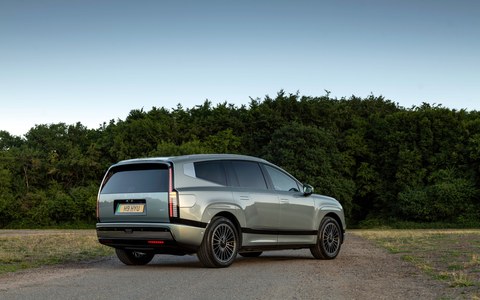
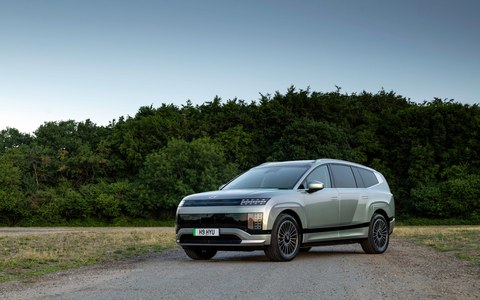
This is Hyundai’s biggest, boldest and squarest EV yet – part SUV, part MPV, part estate – and somehow it works. Hyundai describes its line-up as chess pieces: the IONIQ 5 is the nimble queen, the swoopy IONIQ 6 is the bishop and the IONIQ 9 is the rook, tall, solid and not afraid to block your driveway. It looks far better in the metal than in photos, with the brand’s signature Parametric Pixel lights, a circuit-board-inspired front end and 21-inch alloys that look like supersized 1970s Alpina wheels. From the back it resembles a Volvo V70 that’s been to the future and returned with stories. It might look about as aerodynamic as a brick, but a sculpted underbody, active air shutters and a tapered rear give it a drag coefficient of just 0.26 – slipperier than both the Kia EV9 and the IONIQ 5.
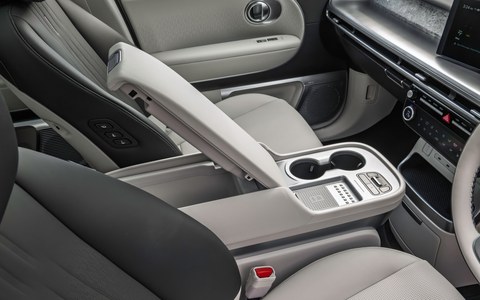
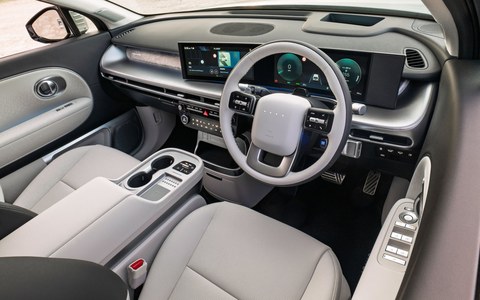
Inside, it feels as though Hyundai has spent most of its budget on floor space and screens – it’s less a cabin and more an Airbnb with a steering wheel. Everything looks and feels well put together, if not quite Audi Q7 posh, although the range-topping Calligraphy trim is genuinely classy. Many of the materials are recycled or made from natural by-products, including fabrics derived from plastic bottles. The highlight is the Universal Island centre console, which slides up to 190mm forwards or backwards and houses storage, a cooled phone charger and even a UV-C steriliser that disinfects small items in 10 minutes. Kids will love it; adults will find it’s one more thing to argue about.
Comfort and practicality
The dashboard is dominated by two curved 12.3-inch screens, one for the driver’s instruments and one for infotainment. The menus are logical and quick to respond, and – crucially – Hyundai has kept physical buttons for the climate controls, so you don’t have to dig through three menus to demist the windscreen at 7am. Wireless Apple CarPlay and Android Auto are standard, and Hyundai’s Features on Demand store lets you download extras such as ambient lighting themes.
We’d avoid the optional digital door mirrors, though. They look futuristic, but cameras don’t give you the same depth perception as a glass mirror, making it hard to judge distances, and you can’t angle them down when parking. Knock one off and the repair bill won’t be pretty either.
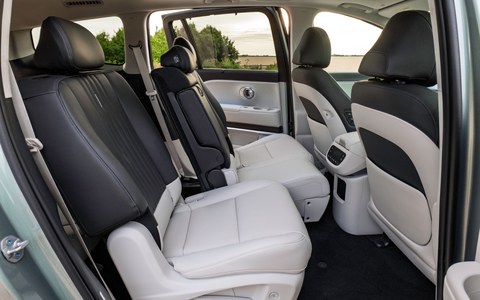
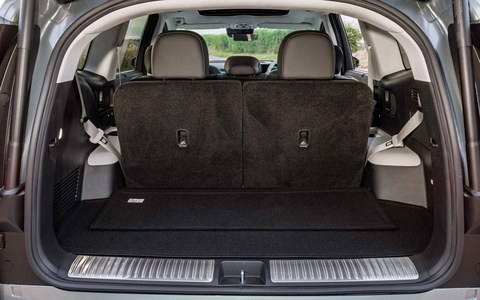
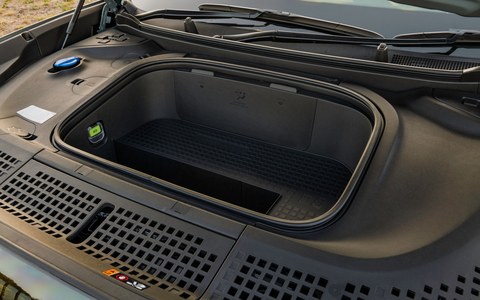
Space is the IONIQ 9’s trump card. There’s enough room to host a yoga retreat, and third-row legroom is roughly on par with the Kia EV9 – among seven-seat EVs, only the long-wheelbase Volkswagen ID. Buzz really beats it. The boot holds 338 litres with all seven seats in place and up to 2,419 litres with everything folded flat, which is practically van territory. There’s a small front boot, or frunk, under the bonnet for cables too.
Standard cars get a three-seat middle bench, but Calligraphy models can be specified with two individual second-row chairs. These slide, recline and even swivel to face the third row, making it far easier to lift little ones into child seats or turn the cabin into what Hyundai calls a ‘mobile lounge’. A rear-view mirror that can show a camera feed means a car full of passengers or luggage won’t block your view out of the back.
Verdict
The Hyundai IONIQ 9 is a seriously impressive family EV. It’s vast inside, generously equipped even in entry-level form, quiet and comfortable on the move, and its rapid charging takes much of the sting out of long journeys. It also undercuts the Kia EV9, Volvo EX90 and Mercedes EQS SUV while offering a bigger battery than most. It’s not perfect. At between £65,000 and £80,000 it’s still a big investment – and a lot more than a Peugeot E-5008 or Volkswagen ID. Buzz. Real-world range falls well short of the headline figure, and its size will put off anyone who spends most of their time in town. But if you need six or seven proper seats, want plenty of tech and a big battery, and have a large driveway to park it on, the IONIQ 9 deserves a place at the top of your shortlist.

Key Specs
Hyundai IONIQ 9
Price (RRP OTR): From £64,995, £78,595 (Performance AWD Calligraphy as tested)
Top speed: 124mph
0-62mph: 9.4 seconds (Long Range RWD), 6.7 seconds (Long Range AWD), 5.2 seconds (Performance AWD)
Power: 160kW (215bhp) (Long Range RWD), 226kW (303bhp) (Long Range AWD), 315kW (422bhp) (Performance AWD)
Torque: 516lb-ft (Performance AWD)
Driving range (combined): 385 miles (Long Range RWD), 372 miles (Long Range AWD and Performance AWD)
Charging time: 11 hrs (11kW, 0-100%), 35 min (130kW, 10-80%)
Insurance group: TBC
Vehicle warranty: 5 years / unlimited miles
Battery warranty: 8 years / 100,000 miles




Comments (0)
Be the first to write a comment
Login/ Signup