
Reviews 8 min read
BYD Dolphin Surf review: is this the affordable EV we've been waiting for?
BYD's smallest and cheapest electric car brings genuine price parity with petrol superminis to the UK. But is the Dolphin Surf a bargain, or a budget buy with too many compromises?
Discover EV expert verdict...


4 / 5
- Price undercuts most rivals by thousands
- Spacious cabin and boot for such a compact car
- Generous standard equipment across the range
- Bouncy ride and limited grip on faster roads
- Weak regenerative braking rules out one-pedal driving
- Entry-level Active model's range is modest
Overview
We've been waiting years for the price of electric cars to come down, and the BYD Dolphin Surf finally delivers what many buyers have been asking for: an EV that costs about the same as a conventional petrol supermini.
It's the Chinese brand's eighth electric car to launch in Europe in less than three years, and it may be its most convincing and important model yet. Confusingly, it isn't a surf-themed special edition of the BYD Dolphin. It's a completely different car that is smaller and cheaper. In China it's sold as the Seagull, where it's a best-seller, but we suspect the negative connotations of chip-stealing seaside birds put BYD's European bosses off. Elsewhere it's badged the Dolphin Mini, and you can see the problem there too.
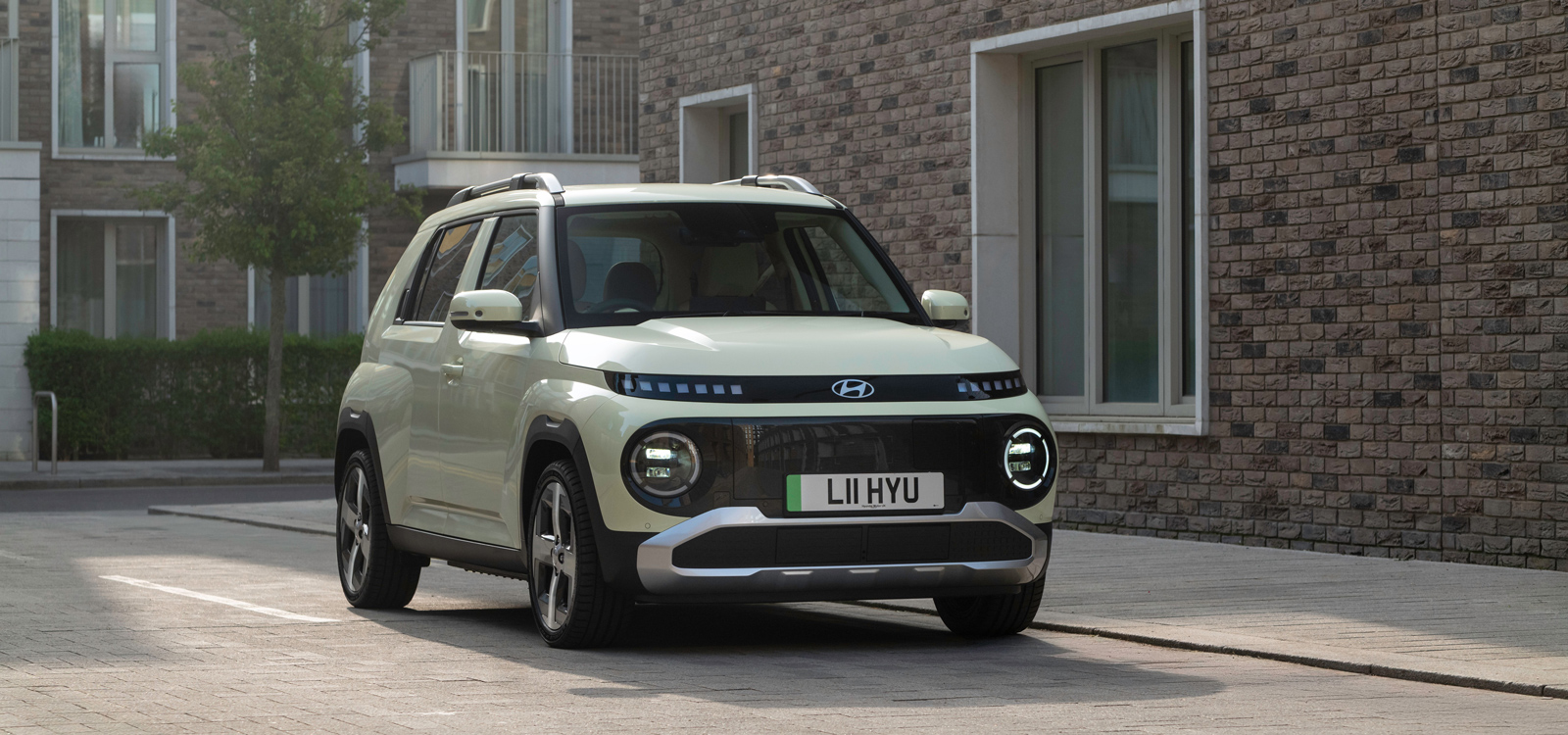
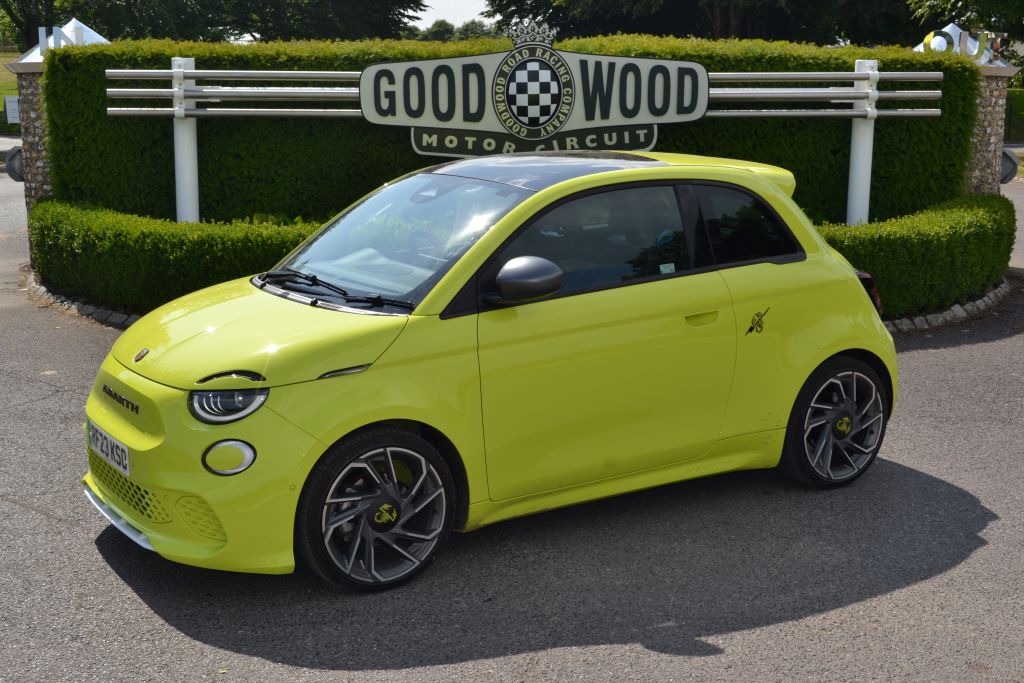
Prices start at £18,650 for the Active, rising to £21,950 for the Boost and £23,950 for the range-topping Comfort. That undercuts similarly sized alternatives such as the Citroën ë-C3, Hyundai Inster, Renault 5, Nissan Micra, MINI Cooper Electric and Fiat 500e, in some cases by several thousand pounds. Only the Dacia Spring and Leapmotor T03 cost less, and both offer less space, range and performance. Frankly, neither feels at home on an A-road. The Fiat Grande Panda is another rival to consider.
Despite measuring just 3.9 metres long, 1.7 metres wide and 1.6 metres tall, the Dolphin Surf has cabin space and boot capacity to rival cars from the class above. That's thanks to BYD's clever platform, which houses the brand's trademark Blade Battery. It uses lithium iron phosphate (LFP) chemistry, which is more durable and safer than traditional EV batteries and contains no cobalt.
Driving
The Dolphin Surf comes with a choice of two motors. The entry-level Active pairs its smaller battery with an 87bhp motor producing 129lb-ft of torque, which gets it from 0-62mph in 11.1 seconds. The Boost uses the same motor but a larger battery, and the extra weight pushes the 0-62mph time out to 12.1 seconds.
The range-topping Comfort gets the most powerful motor in its class, with 154bhp and 162lb-ft. That cuts the 0-62mph sprint to 9.1 seconds. It's hardly blistering, but it's nippy enough for what buyers of this kind of car need. All versions top out at 93mph.
There are three driving modes: Comfort, Sport and Eco. We struggled to tell much difference between the first two, while Eco simply strangles the power.
On the road, the Dolphin Surf feels more sophisticated than the Dacia Spring or Leapmotor T03. It's less composed away from town than the ë-C3 or Renault 5, though, with more body lean through corners and less grip. The ride gets quite bouncy at speed and struggles with potholes and bumps. The powertrain is smooth, but floor the accelerator and the Hankook tyres scrabble for traction.
It's far happier in town. The light steering and tight turning circle make it easy to thread through traffic and squeeze into parking spaces. The soft suspension is also much more settled at lower speeds. The brakes can be grabby, however, and even in its Strong setting the regenerative braking is weak, so one-pedal driving isn't possible. That won't bother everyone, but it's worth knowing.
Crucially, it doesn't feel out of its depth on the motorway. It cruises comfortably with barely a hint of wind noise, and there's enough punch (in the Comfort, at least) for swift overtakes when required.
Range and running costs
Two sizes of Blade Battery are available. The Active uses a 30kWh pack with an official range of 137 miles. The Boost and Comfort both get a 43.2kWh battery, with official figures of up to 200 miles for the Boost and 193 miles for the more powerful Comfort.
In real-world driving, expect around 110 to 120 miles from the Active. The Boost should manage around 160 to 170 miles and the Comfort a little less, depending on the weather and how much motorway driving you do. That makes the Active best suited to urban commuting, while the larger battery models are better all-rounders.
Charging speeds won't blow you away, either. Maximum DC rapid charging is 65kW for the Active and 85kW for the larger battery models. Either way, a 10-80% top-up takes around 30 minutes. On an 11kW home or destination charger, a full charge takes roughly three hours for the 30kWh battery and just over four hours for the 43.2kWh pack. For a family runaround or daily commuter, that's perfectly adequate.
Running costs should be low, particularly if you charge at home on an off-peak tariff. Every Dolphin Surf also comes with BYD's six-year manufacturer's warranty and an eight-year warranty for the battery and electric motor, which is excellent peace of mind at this price.
Design
Is it sporty? Fun-loving? Edgy? Whatever you make of the Dolphin Surf's styling, it's certainly distinctive. The design was led by Wolfgang Egger, who has worked for a number of European luxury car brands over the decades. The single-arch profile helps free up cabin space, while a wide body contour rising along the flanks gives it a dynamic look. The C-pillar has dot-matrix detailing inspired by ice crystals, which makes the roof appear to float above the body. At the front, sharp LED headlights (which, if you squint, have a hint of Lamborghini about them), angular daytime running lights and creases in the lower bumper make the car look wider and bolder. At the back, a full-width light bar is a novel feature for the class, while the roof spoiler helps clean up airflow and improve aerodynamic efficiency. It's not retro chic like the Renault 5, but it's fresh and interesting and stands up well against the quirky Hyundai Inster. A vibrant Lime Green metallic launch colour comes as standard.
Inside, the cabin is practical and packed with useful tech. The build quality and materials are more than good enough for the price and decent by small car standards. The low-set dashboard keeps things feeling airy, and vegan leather upholstery comes as standard on every version. Higher trims add ambient lighting, which lifts the ambience after dark.
Comfort and practicality
The centrepiece of the dashboard is BYD's signature 10.1-inch rotating touchscreen. It runs the brand's latest software, which is fairly quick to respond and intuitive to use. Refreshingly, there are also proper physical switches for the essentials. Apple CarPlay and Android Auto come as standard, along with BYD's own voice assistant.
The front sports seats are comfortable and supportive, and the steering wheel adjusts for reach as well as height, so it's easy to find a good driving position. Rear space is impressive for a car of this size. All versions come with three ISOFIX anchor points, two in the rear and one on the front passenger seat, making the Dolphin Surf unusually versatile for families with young children.
The 308-litre boot is competitive with larger superminis. It's complemented by 20 storage areas dotted around the cabin, including a handy cubby beneath the boot floor for charging cables.
There are some neat tricks, too. Unlike most rivals, you can unlock the car by holding your smartphone or wearable against a sensor on the door mirror, and the BYD app lets you warm or cool the cabin before you set off. Vehicle-to-load (V2L) technology lets you power devices at up to 3.3kW. You could take a coffee machine to work if you don't like your colleagues, or an electric grill to impress them at lunchtime if you do.
Standard equipment is generous. Even the entry-level Active gets rear parking sensors, a reversing camera, LED daytime running lights, adaptive cruise control, air conditioning and electrically adjustable door mirrors. The Boost adds the bigger battery, 16-inch alloy wheels, electrically adjustable front seats, rain-sensing wipers and electrically folding mirrors. The range-topping Comfort brings a 360-degree camera, LED headlights, rear privacy glass, puddle lights, heated front seats and wireless phone charging.
The cabin is also well equipped with airbags and a comprehensive suite of driver-assistance systems. The Dolphin Surf hadn't been crash-tested by Euro NCAP at launch, though BYD was confident of a four-star score.
Verdict
Priced to compete at the value end of the market but offering the space and sophistication of a larger supermini, the BYD Dolphin Surf is very cleverly positioned. It's cheaper than its trendier rivals and only slightly more expensive than the budget options, making it an excellent middle ground.
BYD says the Dolphin Surf lets buyers on a budget go electric without compromise, and we largely agree. It looks fun, it's practical and generously equipped, and it doesn't feel like it's going to fall apart when you shut the door. It isn't the most polished thing to drive on faster roads, but it feels like a "proper" car, and it's an ideal single-car option for professionals and small families alike.
The affordable small EV segment is yet to be conquered. Making it profitable while meeting tough regulations is a real challenge for car makers, but the race is on, and the Dolphin Surf is a very serious contender that could own this space for the next few years while its rivals try to catch up.
Key Specs
BYD Dolphin Surf
Price (RRP OTR): From £18,650 (Active), £21,950 (Boost), £23,950 (Comfort)
Top speed: 93mph
0-62mph: 11.1 seconds (Active), 12.1 seconds (Boost), 9.1 seconds (Comfort)
Power: 65kW (87bhp) Active and Boost; 115kW (154bhp) Comfort
Torque: 129lb-ft (Active and Boost); 162lb-ft (Comfort)
Driving range (combined): 137 miles (Active), 200 miles (Boost), 193 miles (Comfort)
Charging time: approx. 3hrs (30kWh) / 4.5hrs (43.2kWh) (11kW, 0-100%); approx. 30 min (65kW/85kW max, 10-80%)
Insurance group: 14A (Active and Boost) 19D (Comfort)
Vehicle warranty: 6 years / 93,750 miles
Battery warranty: 8 years / 125,000 miles



Comments (0)
Be the first to write a comment
Login/ Signup