Tags: #ev-technology #electric-vehicles #ev-ownership
BYD's smallest SUV is roomy, well equipped and backed by a strong warranty, but slow charging on the entry model and bland driving dynamics keep it from standing out in an increasingly crowded class.
Discover EV expert verdict...


"Build Your Dreams" – that's the promise from BYD, and the Chinese giant seems determined to make everyone's dreams come true at once. In just three years it has launched a line-up that covers almost every key segment, from city hatchbacks and compact SUVs to large saloons and family crossovers.
We've tested plenty of them now, including the Seal, Dolphin, Dolphin surf and Atto 3. We've consistently praised their bold design, competitive pricing, generous standard kit and spacious, tech-packed cabins. We've also flagged some recurring gripes: below-average real-world range, relatively slow charging, sluggish and unintuitive infotainment, overly intrusive safety aids and a bit too much scratchy hard plastic.
So is the Atto 2 any different? Think of it as a scaled-down Atto 3, a compact SUV for buyers who want a raised driving position in an affordable, city-friendly package. There are just two trim levels, Boost and Comfort, priced from £30,850 and £34,950 OTR respectively. Add four paint colours and two interior options, and BYD has kept the choices refreshingly simple.
Both versions use a single motor driving the front wheels. The Boost produces 174bhp and 214lb-ft of torque, while the Comfort ups that to 201bhp and 229lb-ft. Oddly, the extra grunt doesn't show on paper: both share a 0-62mph time of 7.9 seconds and a top speed of 99mph.
There are four drive modes: Eco, Normal, Sport and... Snow. Handy for those three days a year it matters, we suppose. Both trims get MacPherson strut front suspension. The Boost makes do with a torsion beam at the rear, while the Comfort gets a more sophisticated multi-link set-up.
Around town, the Atto 2 is easy and agreeable. It has a tight turning circle, light controls and smooth regenerative braking, which make urban driving painless. Take it onto a B-road, though, and things become less convincing. The suspension prioritises comfort over control, so the ride can feel unsettled over broken surfaces. Wind noise is also noticeable at motorway speeds.
The front wheels can break traction easily if you're heavy with your right foot. The steering is light and remote, telling you very little about what's happening at the tyres. It's comfortable rather than composed. Like many Chinese EVs we've driven lately, it's a competent machine built to get you from A to B, and they're all starting to feel rather similar. Still, for the money, it's more than adequate.
The Atto 2 uses BYD's Blade Battery, an LFP chemistry known for its durability and safety. The Boost gets a 51.1kWh pack with an official range of 214 miles, while the Comfort's larger 64.8kWh battery stretches that to 267 miles. That's not class-leading, and in our experience BYDs tend to fall short of their official figures. Expect something closer to 180 miles from the Boost and 220-230 miles from the Comfort in mixed real-world driving, and less in the depths of winter.
Charging is where the two trims really diverge. The Boost takes almost 40 minutes to charge from 30-80% on a rapid charger, which is poor by today's standards. If you're buying one for family use, you might want to invest in BYD's optional karaoke microphone to keep the kids entertained while you wait. The Comfort is far better, completing the same top-up in around 19 minutes.
The tables turn on AC charging. Using an 11kW wallbox, the Boost goes from empty to full in five and a half hours, while the Comfort's bigger battery needs around 7.2 hours. Either will comfortably top up overnight at home. A heat pump comes as standard on both trims, which helps preserve range in cold weather.
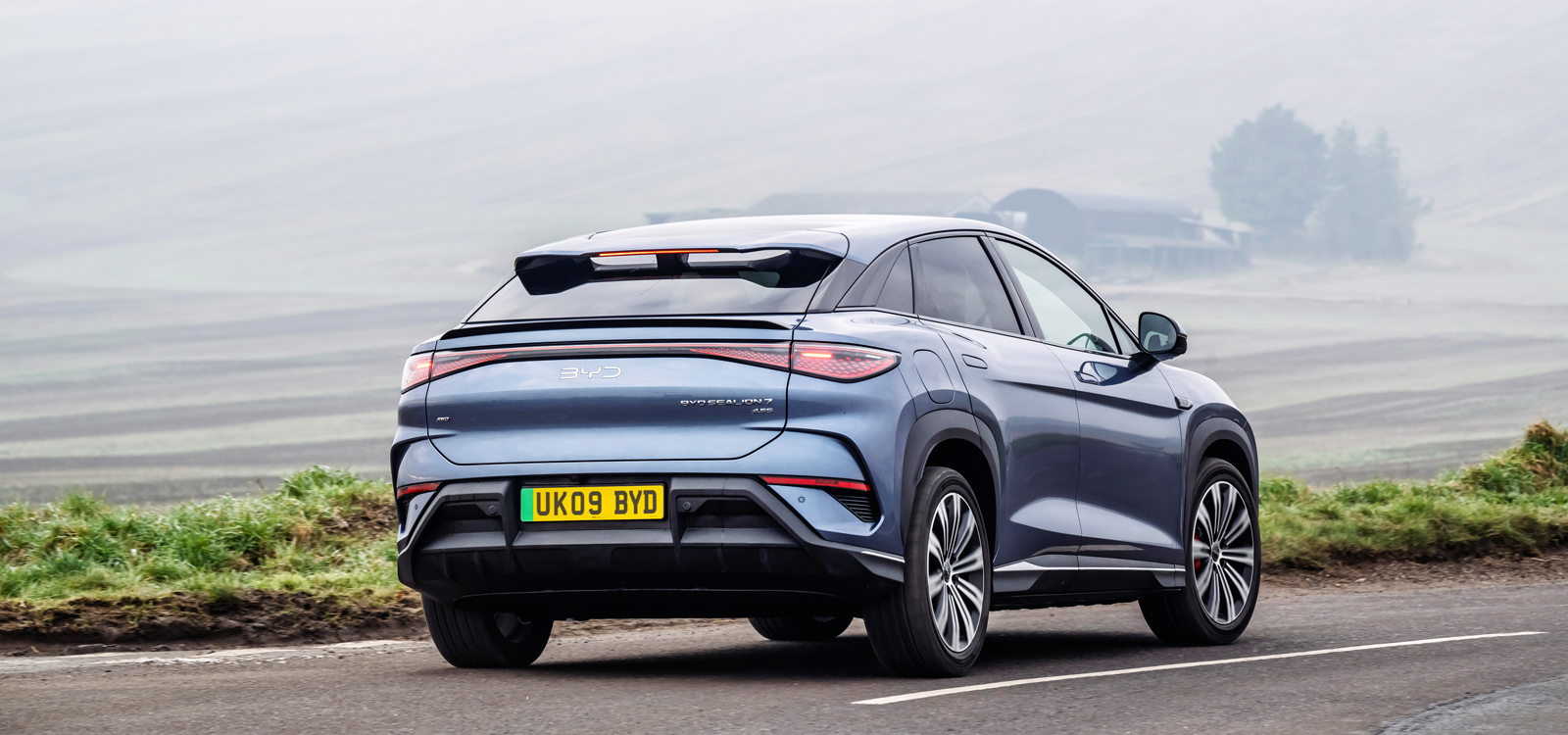
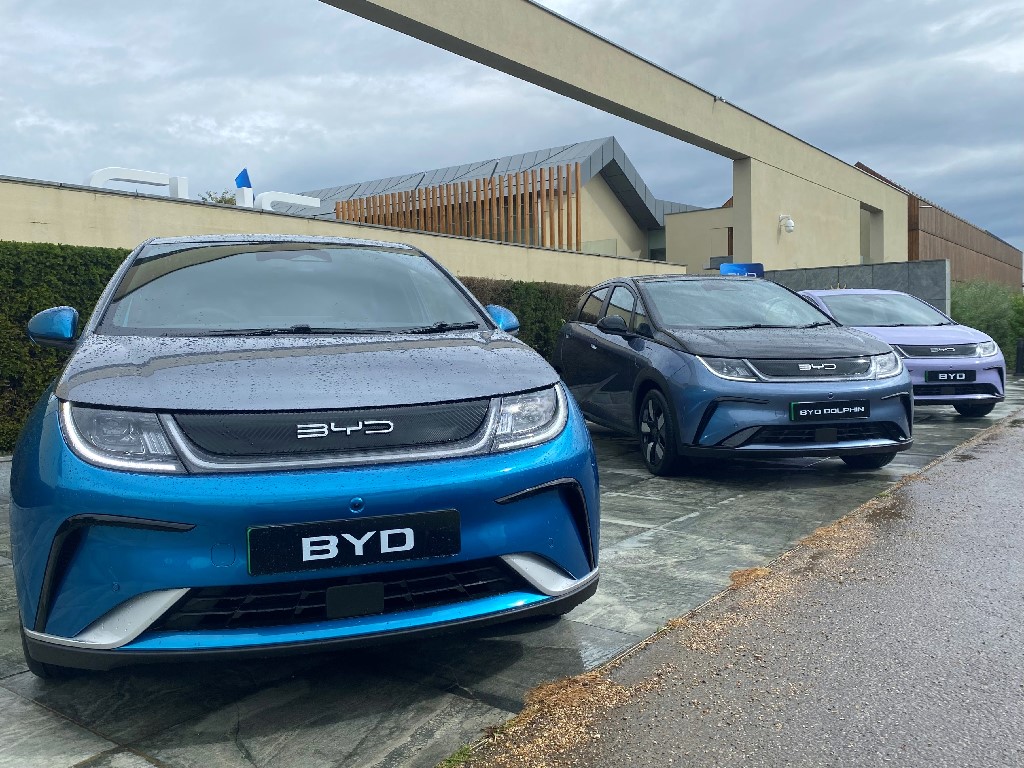
On the outside, the Atto 2 is refreshingly restrained compared with some earlier BYDs. It's not over-styled or fussy, and the whole design feels cohesive. Up front, neatly integrated full-LED headlights sit alongside slim daytime running lights, above a bumper that's been shaped with aerodynamics in mind. In profile there's chunky lower cladding and an on-trend floating roofline, interrupted by a body-coloured element at the C-pillar. At the rear, a roof spoiler sits above a full-width light bar, now something of a BYD signature. It connects the 'Chinese knot' style tail lights, which, if you squint and tilt your head, resemble the number eight. It's a nice bit of cultural storytelling, symbolising luck and continuity.
Inside, the Atto 2 feels a lot more grown-up than the Atto 3, with its gym-equipment door handles and guitar-string door pockets. The layout is clean and unfussy, and material quality is a clear step forward. There are padded surfaces on all the key touchpoints rather than acres of hard plastic, although you'll still find some scratchier stuff lower down. Both front seats are electrically adjustable and heated, as is the steering wheel – a big tick for UK drivers. There's also a panoramic glass roof with an electric sunshade, for those rare occasions when the sun makes an appearance.
Infotainment is handled by a 12.8-inch rotating touchscreen. BYD's software supports apps such as Spotify, YouTube, Zoom and Amazon Music, and wireless Apple CarPlay and Android Auto are standard. Climate controls can be operated with multi-finger gestures: swipe three fingers up or down to change the temperature, and side to side to adjust the fan speed. It's clever, but we'd rather have a button. You can also say "Hi BYD" and let the voice assistant do it for you.
Thankfully, BYD has kept some proper physical switches for the essentials, including the windscreen demister, volume control and drive mode selector. There are also cupholders in the centre console and a decent-sized armrest with storage underneath.
Connectivity is generous. There's a 15W wireless charging pad, a 60W USB-C port and a 7.5W USB-A port up front, plus two more USB sockets for rear passengers. Vehicle-to-Load (V2L) is also included, so you can power a coffee machine from the car's battery. That could be useful if you're sat at a charger in the Boost.
Because the Atto 2 sits on BYD's e-Platform 3.0, the rear floor is completely flat. There's more cabin space than in many rivals, and adults will fit in the back without too much complaint. The boot measures 400 litres in the Boost and, curiously, 450 litres in the Comfort – answers on a postcard, please. Either way, it's more than many competitors in this segment offer.
The BYD Atto 2 is a practical, well-equipped and comfortable small electric SUV. In many ways it perfectly embodies BYD's mission to democratise electrification with sensible, everyday cars. It comes with generous kit, plenty of safety systems, a roomy interior for its size and a six-year warranty, all at a competitive price.
But while it ticks plenty of boxes, it doesn't set the segment alight. It's rather bland compared with some of its more stylish or dynamic rivals. The Boost's sluggish rapid charging is hard to ignore, which makes the pricier Comfort the one to go for if you regularly travel long distances.
If you want a solid, user-friendly EV that's roomy, tech-rich and backed by a strong warranty, the Atto 2 delivers. If you're chasing character or standout dynamics, look elsewhere.
Price (RRP OTR): From £30,850 (Boost), £34,950 (Comfort)
Top speed: 99mph
0-62mph: 7.9 seconds
Power: 130kW (174bhp) Boost, 150kW (201bhp) Comfort
Torque: 214lb-ft Boost, 229lb-ft Comfort
Driving range (combined): 214 miles (Boost), 267 miles (Comfort)
Charging time: 5.5hrs Boost, 7.2hrs Comfort (11kW, 0-100%); approx. 37min Boost, 19min Comfort (30-80%)
Insurance group: 30–32
Vehicle warranty: 6 years / 93,750 miles
Battery warranty: 8 years / 125,000 miles
Related Articles...